

THE SEVEN COMPONENTS OF INTEGRITY
The Dutch Whistleblowers Authority offers guidance on updating integrity policies based on the seven components of the Integrity Infrastructure model
These tips highlight key considerations for using digital technologies with integrity. The questions can be used throughout the organisation to initiate discussions about integrity in the digital workplace and the use of digital technologies with integrity.
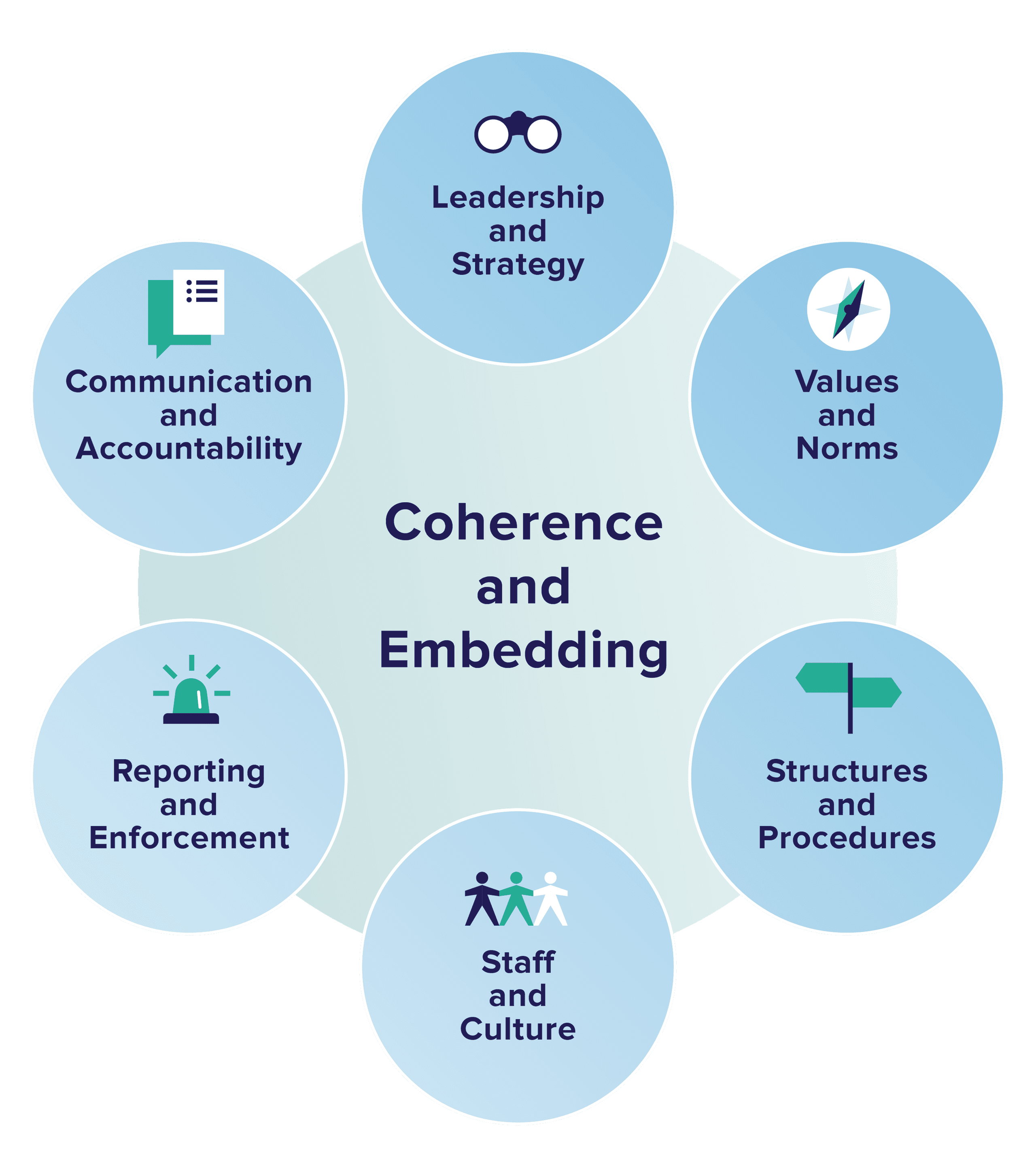
Beeld: Huis voor Klokkenluiders
LEADERSHIP AND STRATEGY
Managers are responsible for the use of digital technologies with integrity in their organisation. Promoting this is part of ethical leadership. It is important that managers provide guidance on using the digital systems an organisation works with in a way that reflects integrity. Managers should also consider digital issues in relation to strategic organisational decisions. Which digital technologies does the organisation use? What is the purpose of using these technologies? With respect to ethical leadership, it is important to determine whether the efficiency gained from using digital technology outweighs its potential negative effects. It is also important that management oversees the use of digital technology within the organisation (see also 3.5 Reporting and enforcement in this brochure). CIOs can play a significant role in this regard in larger organisations.
Employees sometimes have limited insight into how they can use the organisation’s digital systems with integrity. That is why investing in digital literacy within the organisation and facilitating critical discussion about what it means to use technology with integrity are vital. Poor digital literacy can be an additional incentive for management to formulate a clear vision on the use of digital technology.
Working with various digital systems requires flexibility and a capacity for learning on the part of employees. This also applies to managers: it is vital that they set a good example in their use of digital technologies. It is not always clear to employees how digital systems work or which integrity risks are associated with digital technology. More and more digital tools also run partly on AI applications, which means that some decisions in a work process may be outsourced to technology. This results in more efficient work processes, but has the key disadvantage that it becomes more difficult to determine who is responsible for the outcomes of certain work processes.
Moreover, digital developments are advancing rapidly, while legislation sometimes lags behind. This makes it difficult to manage the use of digital technology with integrity. It is important to set standards for using digital technology with integrity, for example by preparing a value-focused code of conduct that addresses the new questions and dilemmas raised by digital technologies. This gives employees clear guidance on what is expected of them. However, a code of conduct alone is often not enough: there must be room within an organisation for ongoing discussions about what does and does not constitute moral use of digital technologies, and for people to learn from each other.
Tips
- Offer employees clarity on working with digital technologies with integrity.
- Ensure that digital technologies are addressed in the organisation’s integrity policy and that this policy is kept up to date.
- Conduct a risk assessment and introduce protective measures for the use of digital technologies as part of updating the organisation’s integrity policy. You can use the questions in this brochure for this purpose. The Authority also offers a list of useful tools in Chapter 2 of this brochure.
- Be aware that the organisation cannot rely blindly on the output of AI applications. Due to rapid changes, employees must remain alert to unexpected errors and outcomes.